Nikon 16-35mm f/4 VR Review

«»

This is an in-depth review of the new professional Nikon AF-S 16-35mm f/4.0G ED VR lens that was released earlier this year. The lens was kindly provided by B&H – the largest photo reseller in the world that I use more than any other to buy my photography gear.

The Nikon 16-35mm VR lens is a professional-grade constant aperture lens for enthusiasts and professional photographers that need an ultra wide-angle zoom lens with the latest generation of VR II (vibration reduction) technology for both FX and DX cameras (equivalent of 24-52mm on DX). Being the world’s first ultra wide-angle zoom lens with vibration reduction, the lens is ultra-fast with AF-S silent-wave focus motor, has Nano crystal coating against flare and is sealed against tough weather conditions. Unlike the Nikon 14-24mm f/2.8G lens, the new 16-35mm f/4.0 VR has a 77mm filter thread, which is great news for landscape photographers.
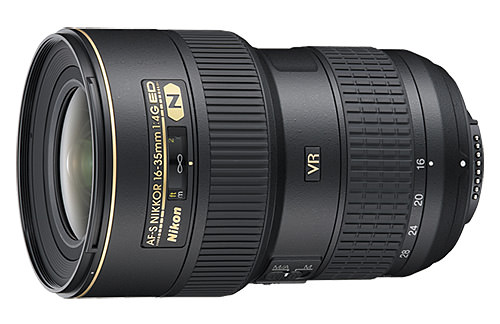
Nikon 16-35mm f4.0G ED VR

AF-S Nikkor 16-35mm f4.0G ED VR

While the Nikon 16-35mm f/4.0 VR is a new generation lens in its own class, I will be reviewing it as a lens that is in a way replacing the older 17-35mm f/2.8D AF-S lens that was due for an update. In this review, I will be making direct comparisons between these two lenses, in addition to the Nikon 24-70mm f/2.8G and will do my best to provide a thorough analysis of this lens, along with image samples and comparisons against other Nikon lenses.

1) Lens Specifications

Main Features:

  1. Ultra wide-angle zoom lens that covers focal lengths from 16mm to 35mm
  2. Vibration Reduction (VR II) enables sharper pictures while shooting at shutter speeds up to four stops slower than would otherwise be possible
  3. The adoption of Nano Crystal Coat effectively reduces ghost and flare
  4. An ultra wide-angle zoom lens that, while offering a wide angle view of 107°, is compatible with 77mm screw-on filters
  5. Fixed maximum aperture of f/4
  6. ED glass and aspherical lens elements are utilized for a new optical design that achieves high resolution
  7. Quiet focusing with built-in Silent Wave Motor (SWM)
  8. Two focus modes selectable – M/A and M

Technical Specifications:

  1. Focal length: 16-35mm
  2. Maximum aperture: f/4
  3. Minimum aperture: f/22
  4. Lens construction: 17 elements in 12 groups (with two ED glass and three aspherical lens elements, and Nano Crystal Coat)
  5. Angle of view: 107° – 63° (83° – 44° with Nikon DX format)
  6. Closest focusing distance: 0.29 m (1.0 ft.) at a focal length of 16mm or 35mm, 0.28 m (0.9 ft.) at a focal length between 20mm and 28mm
  7. Maximum reproduction ratio: 0.25x
  8. No. of diaphragm blades: 9 (rounded)
  9. Filter/attachment size: 77mm
  10. Diameter x length (extension from the camera’s lens-mount flange): Approximately 82.5 x 125 mm
  11. Weight: Approximately 680 g/24.0 oz.
  12. Supplied accessories: 77mm Snap-on Front Lens Cap LC-77, Rear Lens Cap LF-1, Bayonet Hood HB-23, Flexible Lens Pouch CL-1120

2) Lens handling

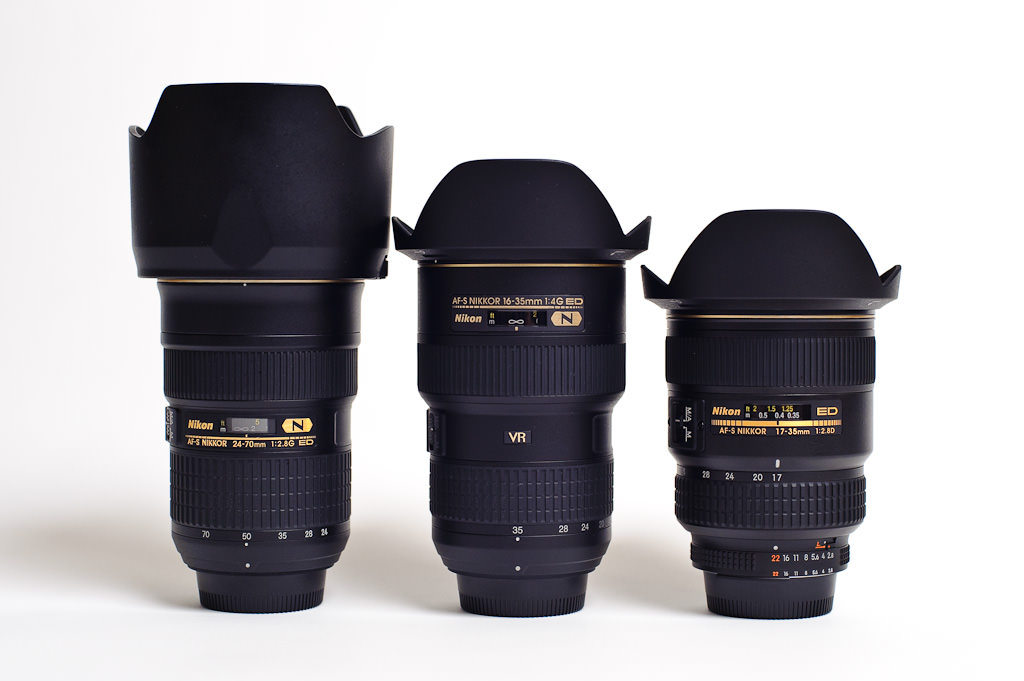
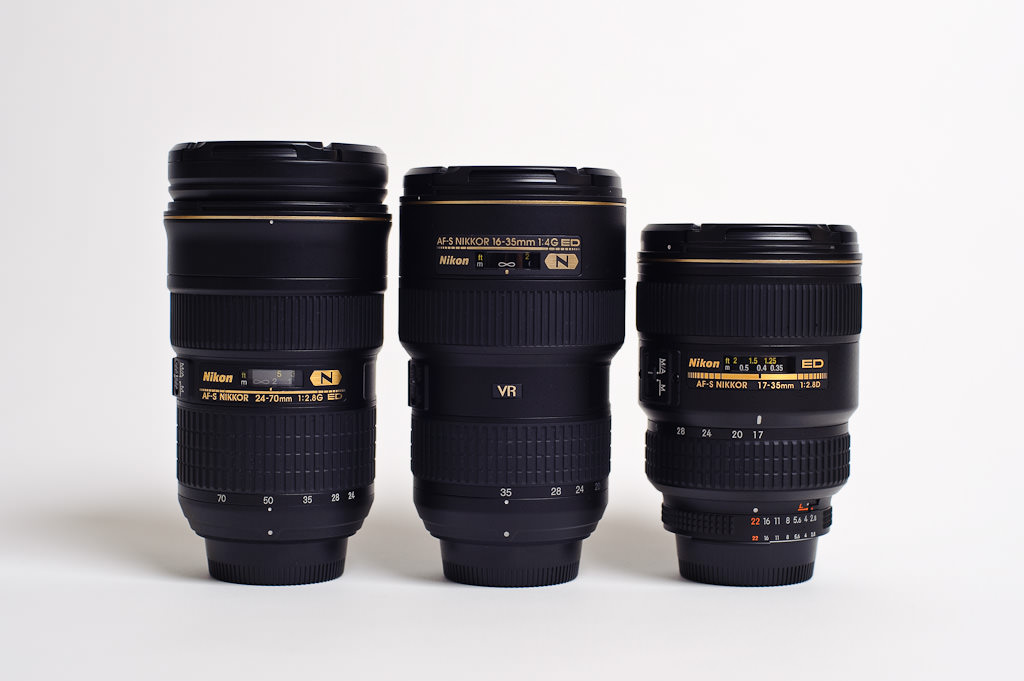
Just like all Nikon professional lenses, the new Nikon 16-35mm VR lens is built to last a lifetime. While some parts of the lens are made of plastic, it feels just like the expensive Nikon lenses made of solid metal. It is designed to withstand tough weather and is well-protected on the outside against dust and moisture. It has a total of 17 optical elements within the lens and weighs a total of 680 grams, making it very easy to carry and handle. Compared to the Nikon 17-35mm f/2.8D lens, it is a little longer in size (see the comparison below) and 65 grams lighter in weight. The lens feels very solid in hands and the zoom ring is easy to rotate from 16 to 35mm and vice versa (it goes from 16 to 35mm in a half turn). Just like on the Nikon 17-35mm, the focus ring is conveniently located on the front of the lens, making it easy to reach it with fingers for manual focus. Just like the 17-35mm, the lens does not extend in/out when zooming. The lens comes with the same “HB-23″ lens hood as in 17-35mm.

Nikon 24-70mm-16-35mm-17-35mm

Nikon 24-70mm, Nikon 16-35mm, Nikon 17-35mm

Nikon 24-70mm-16-35mm-17-35mm No Hood

Nikon 24-70mm, Nikon 16-35mm, Nikon 17-35mm - No Hood

3) Focus acquisition speed and accuracy

I have tested this lens for a while and took it with me along with the 17-35mm on multiple trips and I found the autofocus performance to be instant and accurate, even in low-light conditions. The lens autofocus system with SWM (Silent Wave Motor) is quiet and very close to the performance of the superb Nikon 24-70mm f/2.8G. My real tests were done in very dim environments and focus was acquired correctly almost 100% of the time on an FX body. Here is a good example of how the lens focuses in an extremely dark environment:

Nikon 16-35mm f4.0 VR Indoors

Nikon 16-35mm f/4.0 VR, 1/10 @ f/4.0, ISO 3200

Click here to see the full JPEG version of the shot (80% Quality @ 3,8 MB).

As can be seen from the picture, the lighting conditions were extremely poor – I had to shoot at 1/10th of a second at ISO 3200 to get the right exposure. The lens focused fast and dead-on, wide open at f/4.0.

4) Lens sharpness and contrast

I won’t talk much about lens sharpness – you can see the image samples in the next several pages. One thing I will say, however, is that this lens is one of the sharpest lenses I have ever held in my hands – I was stunned by its performance. This lens performs so well at f/4.0 in the center throughout the zoom range, that you wouldn’t want to shoot it at higher apertures, unless you need to increase the depth of field. Corners on the wide end are a little soft, but still better than on the 17-35mm. Color and contrast are truly amazing and top of the class.

Inside the Restaurant - 16mm, 1/25 @ f/4.0, ISO 3200

Inside the Restaurant - 16mm, 1/25 @ f/4.0, ISO 3200

5) Vibration Reduction – VR II

As I have pointed out before, the Nikon 16-35mm VR is Nikon’s (and World’s) first ultra wide-angle lens with a vibration reduction (VR) technology. Back in the old days, it did not make much sense to put VR into ultra wide lenses, because vibration is not as big of an issue on short focal lengths compared to long/telephoto focal lengths. Plus, it was expensive to add VR on professional lenses, due to the already complex lens optics and design. By adding VR to an ultra wide-angle lens, Nikon is setting a new standard in lens technology and we will be soon seeing many other manufacturers add this very useful feature to their line of ultra wide lenses as well. VR proved itself effective on consumer “wide to tele” lenses such as Nikon 18-200mm VR and it was just a matter of time until Nikon started adding VR to its professional line.

The new vibration reduction system (VR II) on the Nikon 16-35mm f/4.0 VR is truly amazing. I have never been able to produce a sharp hand-held shot at 1/2 of a second on a wide-angle lens and I was able to get quite a few good shots even at a shutter speed of 1 second @ 16mm! Zooming in to 35mm makes it a little difficult, but even then I was able to get good results at 1/4 – 1/8th of a second. Take a look at this shot:

Nikon 16-35mm f4.0 VR

Nikon 16-35mm f/4.0 VR, 1/3 @ f/4.0, ISO 3200

Unbelievable! Tack sharp at 1/3th of a second hand-held! Good luck trying the same on the Nikon 17-35mm!

Click here to get the full JPEG (80% Quality @ 1 MB). The new vibration reduction system really works and you can get some magical shots with this lens. Yes, wedding and event photographers will absolutely love this lens!

6) Bokeh

Just like many other ultra wide-angle lenses, this lens is not really designed to yield beautiful bokeh, due to its small maximum aperture and large depth of field. After doing a couple of test shots at 35mm f/4.0, I was actually pleasantly surprised by the quality of bokeh this lens is able to produce on the long end. Check out this image shot wide open at 35mm:

Nikon 16-35mm Bokeh

Nikon 16-35mm Bokeh

Not bad at all – bokeh looks round and pleasant to look at.

7) Vignetting

There is a heavy amount of vignetting present when shooting wide open (f/4.0) at 16mm, as seen below. Stopping down the lens to f/8.0 almost completely gets rid of it:

Nikon 16-35mm VR @ 16mm f/4.0 Vignetting Nikon 16-35mm VR @ 16mm f/8.0 Vignetting

Much less vignetting visible at 24mm:

Nikon 16-35mm VR @ 24mm f/4.0 Vignetting Nikon 16-35mm VR @ 24mm f/8.0 Vignetting

And at 35mm, it is almost gone:

Nikon 16-35mm VR @ 35mm f/4.0 Vignetting Nikon 16-35mm VR @ 35mm f/8.0 Vignetting

The vignetting issues can be quickly corrected in Adobe Photoshop or Lightroom, so it is not a big problem.

8) Ghosting and Flare

Ghosting and flare are not an issue for this lens. I shot against bright light sources on multiple occasions and did not see any harsh flares or ghosting. Although both 16-35mm f/4.0 VR and 17-35mm f/2.8D share the same hood, one thing for sure – the “N” (Nano-Coating) glass inside the lens definitely helps, making it a good candidate to shoot against the sun.

Here is an extreme example of shooting directly at the sun:

Nikon 16-35mm against the Sun

9) Distortion

One of the things I noticed immediately, was the amount of distortion on the wide end of the lens. This is not unexpected, because we are dealing with a very short focal length that is prone to distortion, but it is definitely a lot more noticeable than on the Nikon 17-35mm at 17mm. Barrel distortion at 16mm goes away at 24mm and slightly comes back as pincushion distortion towards 35mm. When you use this lens for architectural work and for photographing textures and patterns, you can fix the distortion in Photoshop very easily by using the Lens Correction filter. At 16mm, values between +5 and +8 seemed to work pretty well for me.

Let’s now move on to the good stuff – Sharpness tests. Select the next page below.


We're Competing for #1
  • Digg
  • del.icio.us
  • Facebook
  • Mixx
  • Google Bookmarks
  • Diigo
  • email
  • LinkedIn
  • Live
  • MySpace
  • Reddit
  • Slashdot
  • StumbleUpon
  • Technorati
  • Twitter
  • Yahoo! Bookmarks

Related posts:

  1. Nikon 16-35mm f/4.0G VR vs Canon 17-40mm f/4.0L USM
  2. Nikon 16-35mm f/4G VR
  3. Four New Reviews Coming Up
  4. Nikon 24mm f/1.4 Review
  5. Nikon 16-35mm f/4.0 VR Image Samples

Nasim Mansurov
is a professional photographer based out of Denver, Colorado. He is the author and founder of The Mansurovs, along with a number of other online resources. Read more about Nasim here.