
Filters in photography – sheets of glass or resin attach to your camera lens – can serve different purposes for photographers. They can be indispensable for capturing scenery in extremely difficult lighting conditions, they can enhance colors and reduce reflections, and they can simply protect lenses. Filters are widely used in photography and cinematography. Some photographers only use filters in rare situations, while others rely on filters for their everyday work.
So, what makes filters so useful? It actually depends on the type of photography you do.
For example, landscape photographers heavily rely on various filters, while street and portrait photographers rarely get to use them. Since digital photography is all about the quality and intensity of light, lens filters are often necessary to modify the light before it enters the lens.
Many photographers think that some of the built-in tools in Lightroom and Photoshop can simulate filter behavior, making filters redundant in the digital age. As I will demonstrate below, some filters, in fact, can never be simulated in software and some actually help in getting even better results during post-processing. In this article, I will talk about the different types of lens filters available, what they do, when and how to use them.
(As a side note, if you’d like to learn about filters in a video format, we’ve created the most comprehensive tutorial about filters anywhere on Youtube. You can watch it below.)
Table of Contents
What are Filters, and Why Should You Use Them?
Why do you wear sunglasses? Because along with other benefits, they help you see better in intense light, protect your eyes from harmful UV rays/wind/dust and reduce glare. Filters also serve a similar purpose – they can help reduce reflections, protect your lenses from potential damage, fully or partially reduce the amount of light that enters the lens, and even enhance colors.

At the same time, filters can actually hurt photographs if they are not properly used. A good analogy would be wearing sunglasses in a dark room. Therefore, not only do you need to know what filters to use, but you also need to know how to use them and in which situations. There are many different kinds of filters out there – from cheap UV filters to very expensive filters worth several hundred dollars. It can make the process of choosing the right filter type rather challenging.
Let’s go through the different types of filters that are available today.
Overview of Types of Lens Filters
Here is a list of typical lens filters you can purchase today, along with descriptions of their purposes:
| Lens Filter | Photography Type | Purpose |
|---|---|---|
| UV/Clear/Haze Filter | Any | Protects the front element of a lens from dust, dirt, moisture and potential scratches. High quality UV filters can be permanently mounted on lenses with a minimum impact on image quality. |
| Polarizing Filter | Any | Filters out polarized light, dramatically reducing reflections, enhancing colors and increasing contrast. Can be used for any type of photography. Polarizing filters are typically circular, allowing for easy control of the effect of polarization. |
| Neutral Density (ND) Filter | Landscape, Flash Photography | Reduces the amount of light entering the lens, thus decreasing camera shutter speed. Useful for situations where motion blur needs to be created (rivers, waterfalls, moving people) or large apertures must be used with flash to avoid overexposure. They are also useful for video where relatively long shutter speeds are necessary for good-looking motion. |
| Hard-Edge Graduated Neutral Density (GND) Filter | Landscape Photography | Hard-edge GND filters are primarily used in high contrast situations, where the sky is much brighter than the foreground and the horizon is flat. These filters are always rectangular (giving the ability to move them in all directions) and are typically used with filter holders. |
| Soft-Edge Graduated Neutral Density (GND) Filter | Landscape Photography | Soft-edge GND filters are also used in high contrast situations, but where the horizon is not necessarily flat. The soft edge allows for smoother transitions, making the use of a filter less evident. Soft-edge GND filters are also rectangular and are normally used with filter holders. |
| Reverse Graduated Neutral Density (GND) Filter | Landscape Photography | The reverse GND is a specialized filter used by landscape photographers when shooting against the sun while it is setting close to the horizon. While a regular GND filter gradually transitions from dark to clear towards the center, a reverse GND filter transitions from dark to less dark from the center to the edge. |
| Color/Warming/Cooling Filter | Any | Corrects colors, resulting in a change in camera white balance. Some color filters can subtract colors, blocking one type of color and allowing other colors through. These types of filters are popular for film. They are rarely used in digital photography, since their effects can be easily applied in post-processing. |
| Close-Up Filter | Macro Photography | Also known as “diopter,” a close-up filter allows a lens to focus closer on subjects. These filters are only used for macro photography. |
| Special Effects Filter | Any | There are a few different types of special effects filters. Star filters make bright objects look star-like; softening/diffusion filters create a “dreamy” look used for portraits, multivision filters create multiple copies of a subject; infrared filters block infrared and pass visible light; bokeh filters have a certain shape cut in the middle of the filter that makes bokeh highlights have the same shape, etc. |
Types of Lens Filters
Lens filters come in different shapes and forms, as shown below. The most popular lens filters are circular, screw-on filters. Those mount directly onto the filter thread in front of a lens. They come in different sizes, depending on the lens filter thread. The standard and the most common size of screw-on filters for professional lenses is 77mm.
Types of Lens Filters:
- Circular screw-on filters – most common type that mounts directly on the lens filter thread. Examples of circular screw-on filters include UV/Clear/Haze filters, circular polarizers, neutral density and color filters. Circular filters also come in different thicknesses – some are thick that can potentially add vignetting, while others are ultra-thin to diminish vignetting, but make it impossible to put a lens cap.
- Square filters – a popular choice for landscape and other photography. A filter holder directly attaches to the lens filter thread and can hold one or more filters. The most popular sizes are 3×3 and 4×4. Can be stacked together in certain situations, which can negatively impact image quality and add reflections.
- Rectangular filters – another popular choice, primarily among landscape photographers. Mounted just like square filters via a filter holder system. Because it is impractical for graduated neutral density filters to be circular (due to different sizes of high-contrast areas and composition), rectangular filters are the primary choice for landscape photography. Unlike square filters, they have more room to move up and down. The most popular size is 4×6, although larger and smaller filter sizes are also available.
- Drop-in filters – these filters are used inside long telephoto lenses, due to the large size of the front lens element. Only clear and polarizing filters are used for drop-in filters.
Lens Filters Explained in Detail
Let me go through each filter type in detail and show the effects they produce in pictures (where applicable). It is often too difficult to understand what each filter does and decide on whether you need it or not, so I hope the below information will make it easier for you to decide whether you want a particular type of filter or not.
1. UV/Clear/Haze Filter
 The purpose of a UV / Clear / Haze filters today is to simply protect the front element of a lens. In the past, these filters were used to block UV from hitting the film. All digital camera sensors have a UV/IR filter in front of the sensor, so there is no more need to use UV filters on DSLRs. Many photographers use these types of filters for protection, because it is easier and cheaper to replace a filter than to try to repair a scratched or broken lens element. I personally prefer to keep a clear filter on my lenses at all times, because they are easier to clean.
One thing you have to make sure before you purchase a clear filter, is that you buy high-quality glass with the special multi-resistant coating (MRC). The worst thing you can do is mount a low-quality filter in front of an expensive lens. Not only will it hurt image quality, but it will also add nasty reflections, ghosts, and flares to your images. I personally prefer B+W F-Pro MRC filters (they are not cheap), but you can also purchase other great alternatives from Tiffen, Hoya, and other manufacturers.
Should you use a clear filter permanently on your lenses? This question brings up heated debates between photographers. Many believe that adding a piece of glass in front of lenses only hurts images and does very little to protect them, while others like me keep them for peace of mind and easier cleaning. Some lenses with recessed front elements like the Nikon 50mm f/1.4G can be painful to clean, so a clear filter would make lens maintenance less cumbersome.
To avoid vignetting and other problems, UV filters should never be stacked with other filters.
2. Polarizing Filter
 There are two types of polarizing filters – linear and circular. Linear polarizers should not be used on DSLR or mirrorless cameras, because they can result in metering errors. Circular polarizers, on the other hand, are perfect for DSLRs and do not cause any metering issues due to their construction. Circular polarizing filters are essentially linear polarizers, with a second glass element attached to their back that circularly polarizes the light, giving accurate exposure results when the light hits the light meter. When the two elements are aligned at the right handle and orientation from the sun, the captured image could have more saturated colors, bluer skies, fewer reflections, and higher overall contrast. Polarizing filters can also reduce haze, which is very useful for landscape photographers.
I never leave my home without a polarizing filter. When photographing landscapes, I often use a polarizing filter to spice up the colors, darken the sky and reduce haze. Polarizing filters are a must when photographing waterfalls or other wet scenery with vegetation.
There are a couple of potential issues that you need to understand when using a polarizing filter:
- There is a minimum and a maximum effect of polarization, depending on the filter alignment. You should rotate the filter every time you compose for best results. Take a look at this example of minimum and maximum effect of polarization:
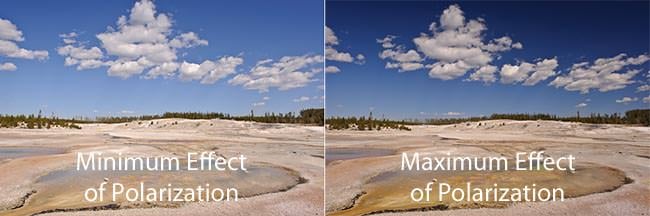
NIKON D700 + 24-70mm f/2.8 @ 26mm, ISO 200, 1/640, f/8.0 - The effect of polarization changes relative to the sun. The maximum effect of polarization is achieved when the lens is pointed 90 degrees from the sun (in any direction). A simple trick is to form a pistol with your index and thumb fingers, then point your index finger at the sun. Keep pointing at the sun and rotate your hand clockwise and counter-clockwise. The maximum effect of polarization will be where your thumb points in any direction.
- Avoid using a polarizing filter on ultra wide-angle lenses. You might end up with a partially dark sky that will be tough to fix in post-processing. Here is an example of what happens when using a polarizer on a wide-angle lens:
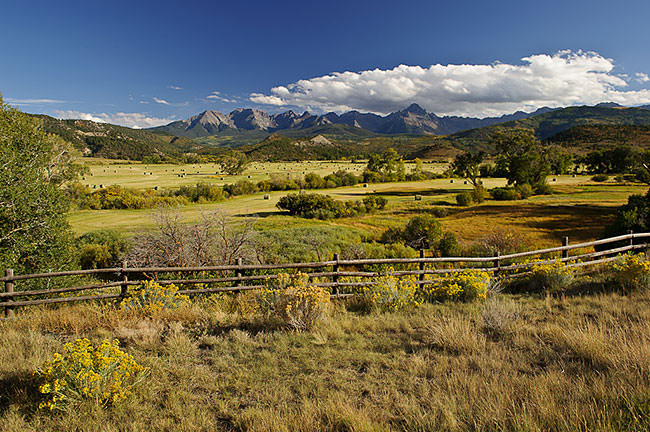
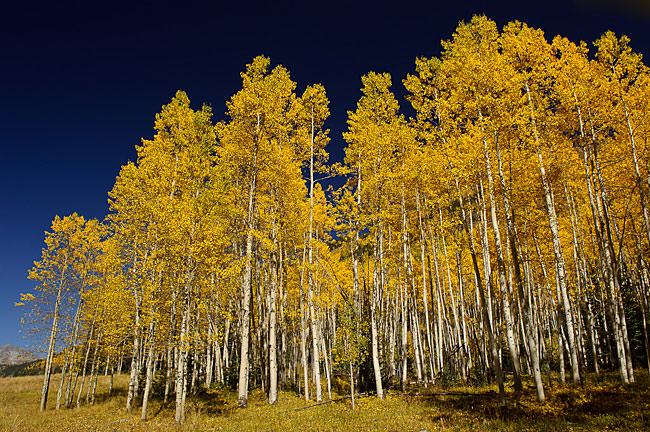
- In some cases the maximum effect of polarization can result in an unnatural-looking dark blue sky as shown below:
- There is a loss of approximately 1.5 to 2 stops of light when using polarizing filters, so you should watch your shutter speed when shooting with a polarizer hand-held. Singh-Ray polarizing filters are better than others in this regard and only lose around 1 stop of light.
- Polarizing filters are typically thicker than regular filters and therefore can result in unwanted vignetting, although some filters like the B+W High-Transmission MRC-Nano Master filters are thinner and made for wide-angle lenses.
To avoid vignetting, polarizing filters should not be stacked with other filters. Due to light loss, you should also use a polarizing filter only when needed. In some high-contrast situations, it might be necessary to stack a polarizing filter with a neutral density filter (see below).
3. Neutral Density (ND) Filter
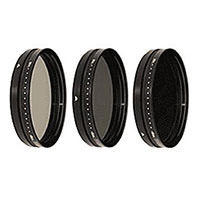 The purpose of neutral density filters is to reduce the amount of light that gets to the camera and thus decrease the shutter speed and increase exposure time. These types of filters are particularly useful in daytime, because of the abundance of light that cannot be significantly reduced by stopping down the lens aperture and decreasing ISO.
For example, if you are photographing a waterfall and your starting point is ISO 100, f/2.8, 1/2000 that results in good exposure, stopping down the lens to f/22 will only slow down the shutter speed to 1/30 of a second. This would be too fast to create a “foggy” look for the falling water. By using an 8 stop neutral density filter, you could slow down the shutter speed all the way to 2 seconds while keeping lens aperture at f/11 instead of f/22 (using apertures beyond f/11-f/16 in normal lenses decreases image quality due to diffraction).

Neutral density filters are also useful for flash photography. If you were photographing a model at 1/250 of a second at f/2.8 on a bright sunny day with flash to create a dramatic effect, you would most likely end up with an overexposed subject. You cannot increase the shutter speed because flash sync speed limits you to 1/250 max, so your only option is to stop down the lens aperture to a larger number. Let’s say that number is f/11. But then what if you want to isolate your subject from the background and still have nice bokeh? Without using high-speed sync, your only option is to use a neutral density filter to reduce the amount of light that makes it to the camera.
Video also makes essential use of neutral density filters. In order to create natural-looking motion, the shutter speed of video is typically kept at one over twice the shutter speed. For example, video shot at the very common 24 frames per second is typically shot with a shutter speed of 1/48. In most cases outdoors, and especially when using fast apertures, video will be overexposed even at base ISO. The only solution is to use a neutral density filter.
Neutral density filters can be both circular and rectangular. There are no benefits to having a rectangular neutral density filter, so it is best to buy a circular ND filter for size and portability benefits.
It is sometimes necessary to stack neutral density filters to decrease the shutter speed even more. Try not to stack ND filters with wide-angle lenses to avoid vignetting.
4. Graduated Neutral Density (GND) Filters and Filter Holders
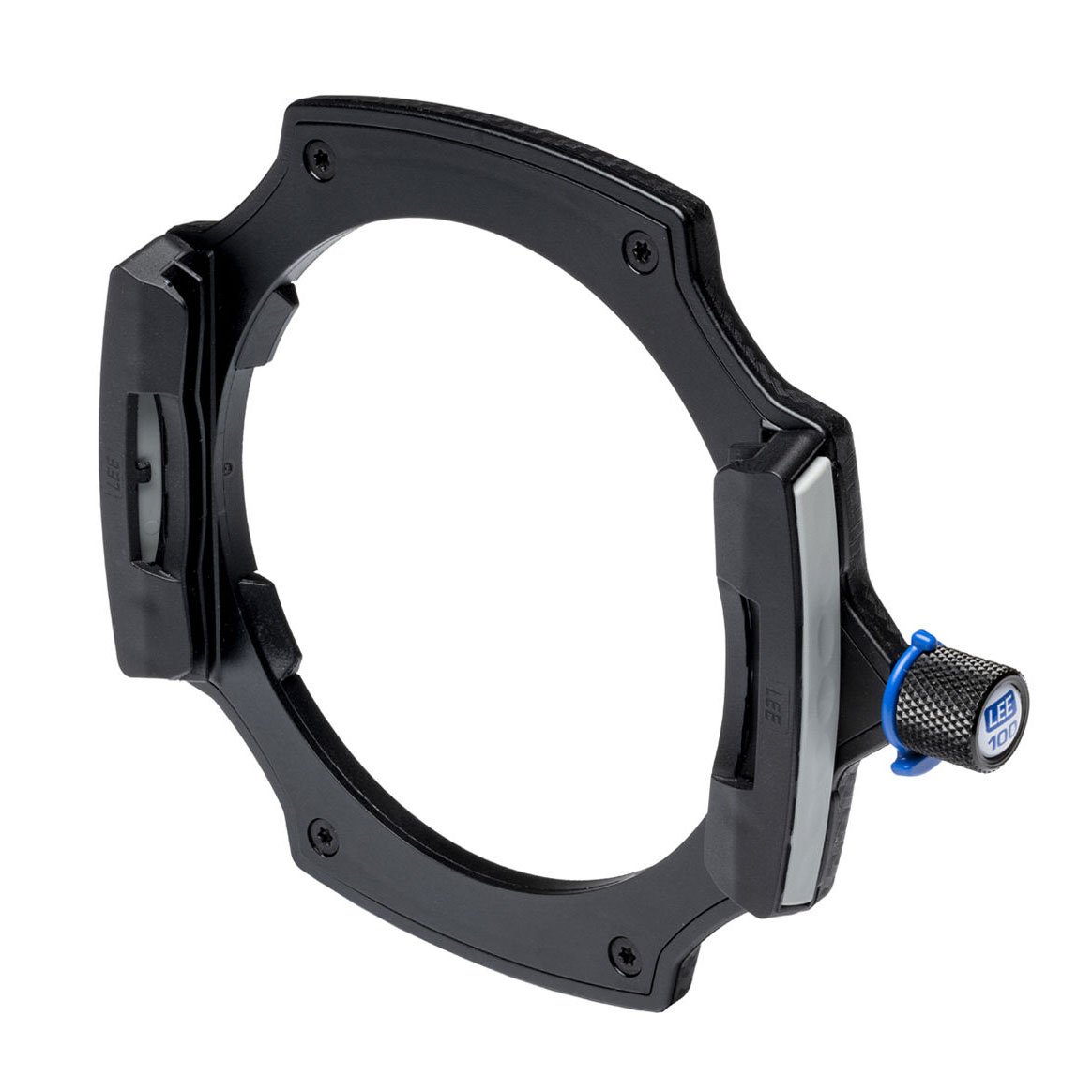 The difference between neutral density and graduated neutral density filters is that the latter is half clear. Because the size of the sky versus the foreground can change depending on the composition, most GND filters are made in a rectangular shape.
Therefore, these filters generally must be either used with a filter holder system, or must be held by hand in front of a lens. The advantage of using a filter holder is that you can stack multiple filters, rotate them, and move them up and down easily. The disadvantage of using a filter holder (other than price) is that it can add vignetting, so you have to be careful when using wide-angle lenses.
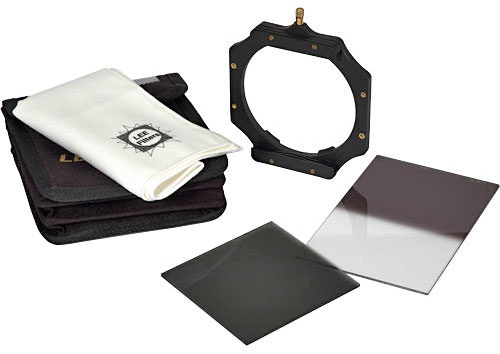
The image shown here is Lee’s filter holder that can stack up to three filters at a time. I personally use this filter system for my landscape photography work and I take it with me everywhere I go. When using the filter holder on a full-frame camera with my Nikon Z 14-30mm f/4 S, I use Lee’s wide-angle adapter ring to minimize vignetting (specifically the 82mm adapter ring, because that’s the filter thread size on the 14-30mm f/4). It’s annoyingly expensive for a basic piece of aluminum, but at least it prevents vignetting and lets me use graduated filters even at 14mm.
If you mount Lee’s filter holder – or any filter holder like it – on top of a polarizing filter instead of attaching it directly to your lens, you will end up with vignetting at longer focal lengths more easily. So, you may want to buy a square 100x100mm polarizer to fit in the filter holder.
5. Hard-Edge Graduated Neutral Density (GND) Filter
 Hard-edge graduated neutral density filters can be very useful in high-contrast situations, where the sky is very bright compared to the foreground and the horizon is flat (due to hard transition from dark to clear). While photographing, the hard edge in the center is aligned with the horizon. The sky is then darkened depending on the intensity of the filter. A two or three-stop hard-edge GND filter is often sufficient to balance the shot.
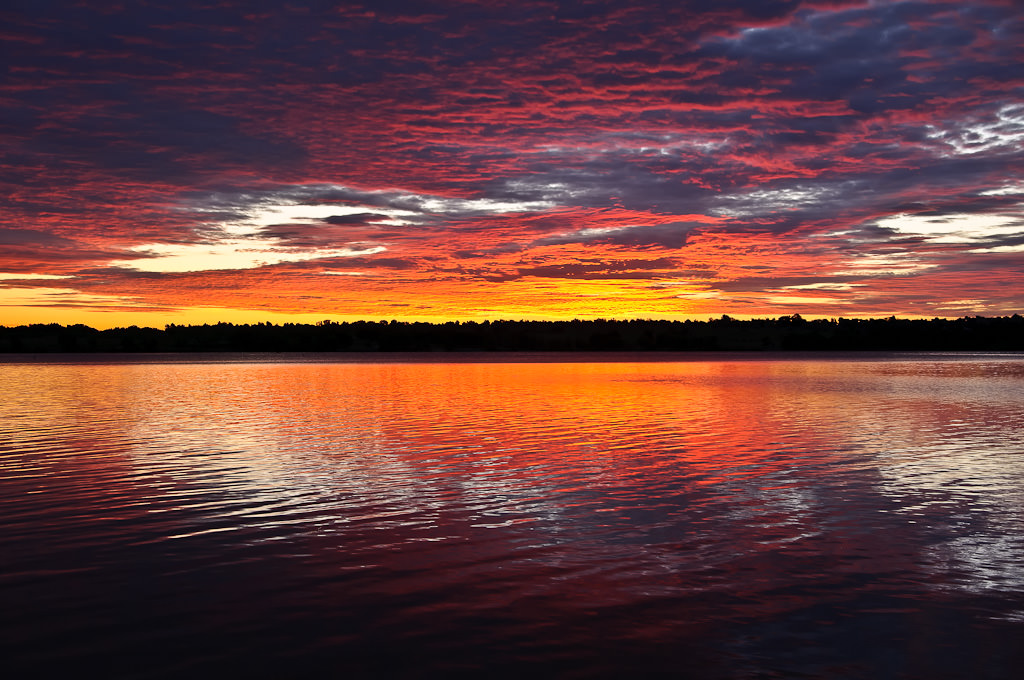
Note that the horizon is straight and therefore the filter edge and transition are not visible in the image.
The problem with hard-edge GND filters is that the horizon is rarely flat (especially where I live), so soft-edge GND filters are often more useful. Be careful when stacking hard-edge GND filters in high contrast situations – both filters should be properly aligned to avoid nasty transitions.
6. Soft-Edge Graduated Neutral Density (GND) Filter
 Compared to hard-edge GND filters, soft-edge graduated neutral density filters gradually transition from dark to clear, allowing photographers to use these filters when photographing a non-flat horizon. While mountains, hills and other objects above the horizon can be problematic for hard-edge GND filters, soft-edge GND filters work much better in those situations instead, due to the gradual transition. I use soft-edge GND filters for my landscape photography work a lot and find them more useful than hard-edge GND filters.
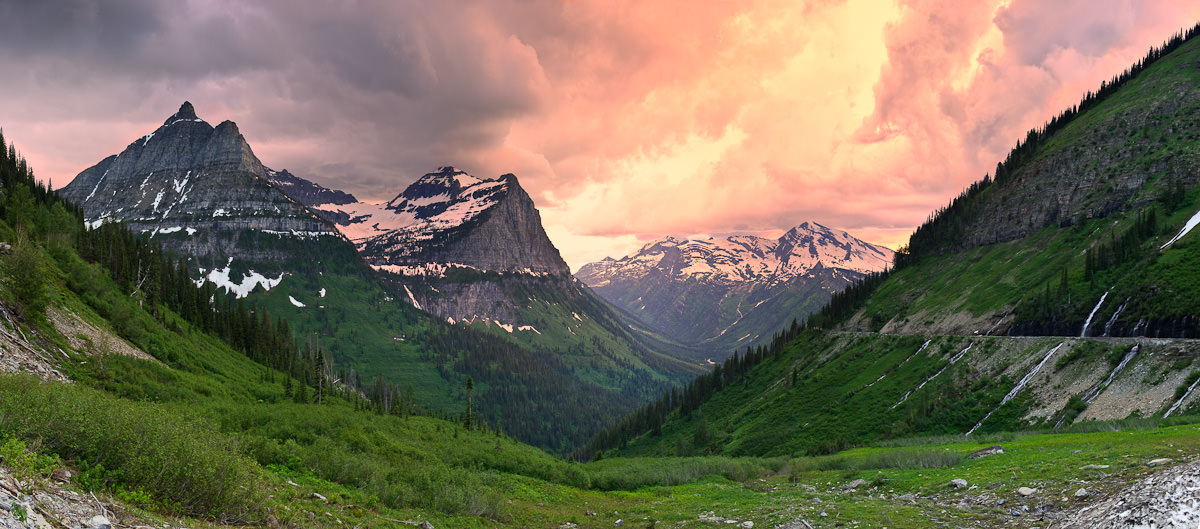
NIKON D3S + 24-70mm f/2.8 @ 38mm, ISO 200, 1/6, f/8.0
7. Reverse Graduated Neutral Density (GND) Filter
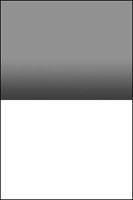 Reverse graduated neutral density filters are relatively new. When compared to regular hard/soft-edge GND filters, they are dark at the horizon (hard-edge) and gradually soften towards the top. Reverse GND filters are very useful for sunset shots when you shoot against the sun and it is near the horizon. A common problem with such sunsets is that the sun is much brighter than the sky. If you use a hard-edge GND filter, the sky might get too dark and if you use a soft-edge GND filter, the sun will be overexposed. The solution is to use a reverse GND filter, which balances the sun and the sky in the frame, resulting in a more balanced exposure.

Stacking reverse GND filters is sometimes necessary in high-contrast and other rare situations.
8. Color/Warming/Cooling Filter
 Color / Warming / Cooling filters are used in order to alter the colors in a photo. There are two types of color filters – color correction and color subtraction. The former is used for correcting white balance, while the latter is used for absorbing one color while letting other colors through.
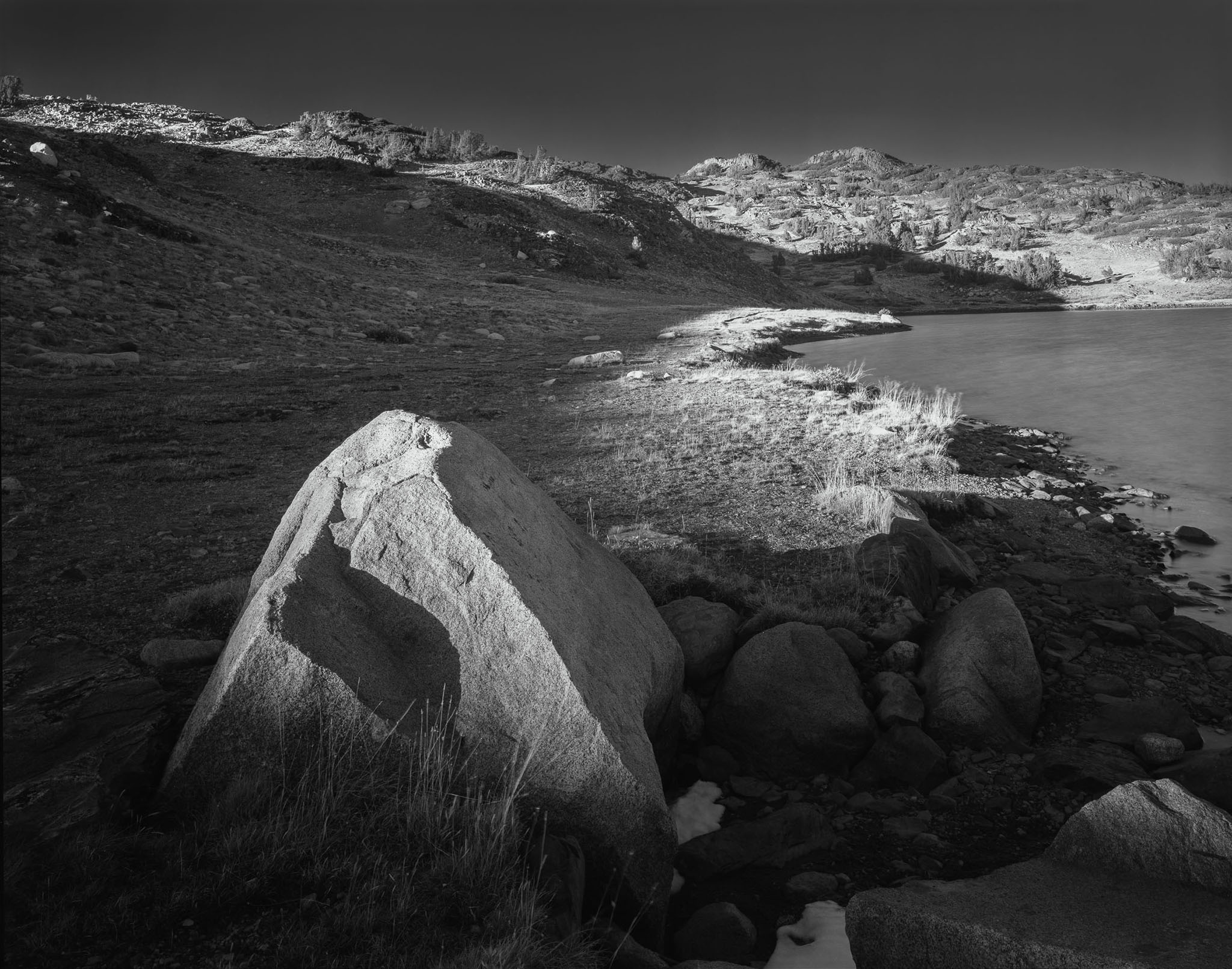
Color filters in general are are quite popular for film photography (especially black and white photography). However, they are rarely used for digital photography, since color effects and white balance changes can be easily accomplished in post-processing software like Lightroom and Photoshop.
Here’s an example of a photo taken on black and white film, where a red color filter was used in order to darken the blue sky:
9. Close-Up Filter
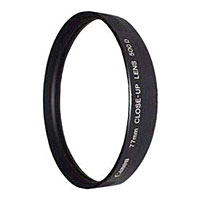 Close-up filters are generally called close-up lenses, because they are more lenses than filters. They attach to lenses just like filters, which is why I am listing them as filters. Close-up lenses are primarily used for macro photography to be able to get closer to the subject, decreasing the minimum focus distance of the lens. Close-up lenses are a cheap way to convert your normal lens to a macro lens, although they do negatively affect image quality. For the best results, it is recommended to use a macro lens instead. Stacking close-up filters is acceptable, although image quality is hurt even more.
10. Special Effects Filter
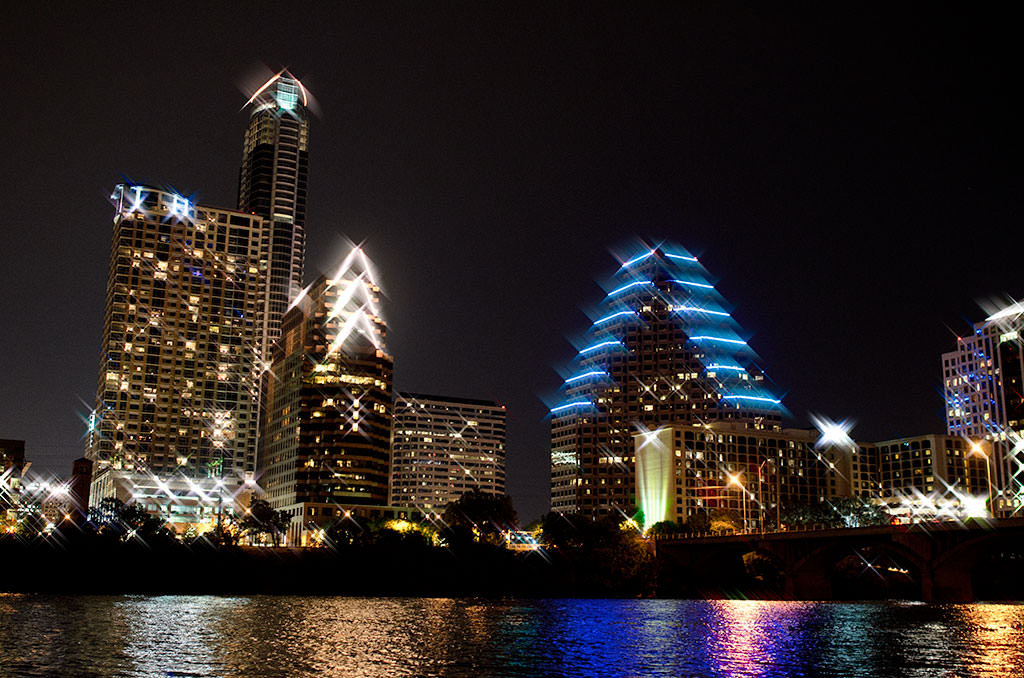
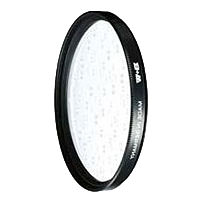 Special effects filters can produce some cool effects, but since most effects can be easily produced in Photoshop, these filters pretty much lost their popularity. Digital photographers rarely carry these filters and I personally do not use them either. The star filter can be easily created in Photoshop through a couple of steps using the “Motion Blur” filter, softening glow can also be easily done through a couple of steps with the “Gaussian Blur” filter and most other filters can also be done in Photoshop. The only filter that cannot be reproduced in Photoshop is a bokeh filter because the highlights cannot be easily changed through post-processing techniques.
Here is a 2 minute “star effect” that I created in Photoshop using very simple technique with the Motion Blur filter:
Special effects filters are more popular in video where creating effects is either harder or more consuming of computer resources. An example is Moment’s Moment CineFlare Blue Streak Filter which simulates to some extent the flare caused by many anamorphic lenses.
Filter Material – Glass vs Resin Filters
Filters can be made from glass, plastic, resin, polyester and polycarbonate material. Glass filters are typically of the highest quality, but are very expensive and tend to easily break, especially of square or rectangular type.
Plastic and resin filters are much cheaper than glass and do not easily break – they are the top choice for graduated neutral density filters. Polyester filters are much thinner than glass or resin and are of very high quality, but are prone to scratches and hence not very practical on the field. Polycarbonate filters are very tough, scratch-resistant and are a good alternative to plastic/resin filters. For best results, I recommend using glass instead of resin filters.
Step-Up / Step-Down Rings
Because filters can be expensive, it is much cheaper to buy a single standard filter (for example 77mm) and buy step-up rings for lenses that have smaller filter threads. Step-down rings can cause vignetting and other problems, so always try to use step-up rings instead. You can buy step-up rings for both circular and square filter holder systems in various sizes.
Conclusion
As you can see, camera lens filters are not just simple pieces of glass. There are many different types of filters that all have different effects, not to mention higher quality and lower quality versions of each of those filters.
Even though it may seem overwhelming at first, my recommendation is simple: start with a circular polarizing filter with the same size as your lens’s filter threads. If you find yourself using it a lot (which most landscape photographers, at least, probably will) then start to look at other filters.
After polarizers, the most useful filters are neutral density and graduated neutral density filters. I don’t recommend most other types of lens filters, unless you shoot in tough conditions (like sandstorms) where you may want a UV filter to protect the front of your lens. If your situation demands any other filters, you probably already know it. For example, film photographers will commonly use solid color filters when shooting black and white.
In any case, I hope this article gave you a good introduction to filters and why they’re so important in photography. Let me know below if you have any questions about camera lens filters, and I’ll do my best to answer!

Nasim, this comment doesn’t seem to be accurate, as this same set up I just tried and it has obvious vignetting at 14mm: “my Nikon Z 14-30mm f/4 S, I use Lee’s wide-angle adapter ring to minimize vignetting (specifically the 82mm adapter ring, because that’s the filter thread size on the 14-30mm f/4). It’s annoyingly expensive for a basic piece of aluminum, but at least it prevents vignetting and lets me use graduated filters even at 14mm.”
Bit late to the party, but can any one tell me if I buy a square filter system, can I use filters from other manufacturers?
Thanks for your time.
Yes, you can as long as the thickness is the same for example 100mm x 100mm x 2mm thick.
or 100 x 150mm x 2mm thick. should still fit.
Also, if you get light in you might have to fit a thin bit of felt around the filter holder to block off the light that is seeking in.
I used to work as a customer service in one Germany company who sell switch and socket in China. Now I am working in OEM manufacturer who focus on camera filter production and research for more than ten yeas as sales. I know little about camera filter firstly and learn much from your articles, and I can sell more about camera filter if I am familiar wit the product, thanks very much.
I have seen circular grad’s although they are not so common
I used to use protective filters in front of my Nikon DSLR glasses for many years, until I stopped from a couple of years.
Several reasons. First, my glasses are consumer levels. Only one has a gold ring of higher quality zoom. A high quality B+W filter (the only one I trust) is proportionally expensive.
Next, I am on the camp that believes a separate layer of glass in front of the lens can never do any good, and can only harm the quality however small. Of course, again, this is only protective filter I am talking about. This is just physics, there is no debate about it.
There is one exception as mentioned in the article. I do use a B+W MRC filter in front of the 50mm Prime. The front element is recessed and a pain to keep it clean. This is just for convenience. Initially, I didn’t, but finally gave in because of the hassle.
All in all, this is a good read. The fierce debate about the protection offered by a clear filter will not end anytime soon.
Hi nasim. Another fantastic, clear and practical article, thanks so much.
Question: has anyone assessed whether the current generation of UV filters affect color, as opposed to a clear filter. I’m wondering right now whether to keep buying UV filters vs clear filters for protection.
Some UV filter manufacturers say in their description that they “filter blue light”, as if that is something good, but to me it sounds like a nightmare.
Thank you.
Hi Nasim,
Thanks for your great informative article. The way you explained about lens filter is awesome.
Thanks, Nasim. This is one of the most informative articles I’ve seen on filters so far. You wrote this article years ago. Is 77 mm still the most recommended size of circular filter today?
I’ve never had any problems that I could attribute to a filter but I’ve been trying to resolve bad image quality when using my Tamron 150-600 G2 at 500-600mm for a while. I almost always have a filter on every lens that I own but I decided to try the Tamron without a filter to see if it made a difference. The improvement in image quality is dramatic, even without any sharpening after I imported into Lightroom. I took test shots at targets about 150 and 250 feet away, focal lengths from 400 to 600mm. With a filter on quality is not acceptable at the longer focal lengths. Without a filter I have no complaints about image quality. I used high shutter speed and ISO 400 on my D750. I cleaned the filter before my final tests but that didn’t seem to change earlier results with a filter on.
I used this filter: B+W 95mm UV Haze MRC 010M Filter. It’s not the B+W line that you suggest. It’s the filter that came with the lens when I bought it from B&H in 2018. I’m going to order a B+W 95mm XS-Pro Clear MRC-Nano 007 Filter and see if I have better results with that filter and whether I have similar results to the tests I’ve just done. If I can get acceptable results with that filter on I’ll use it. If not, I’ll return it to B&H.
It is possible that I have a defective filter. I’ve had it for more than one year so the warranty has expired.
Hi Nasim,
Thank you for a wonderful article. I was reading up on CPL and ND filters and came across your article.